
Hidden Gems: Exploring the Lesser-Known Camino de Santiago Routes
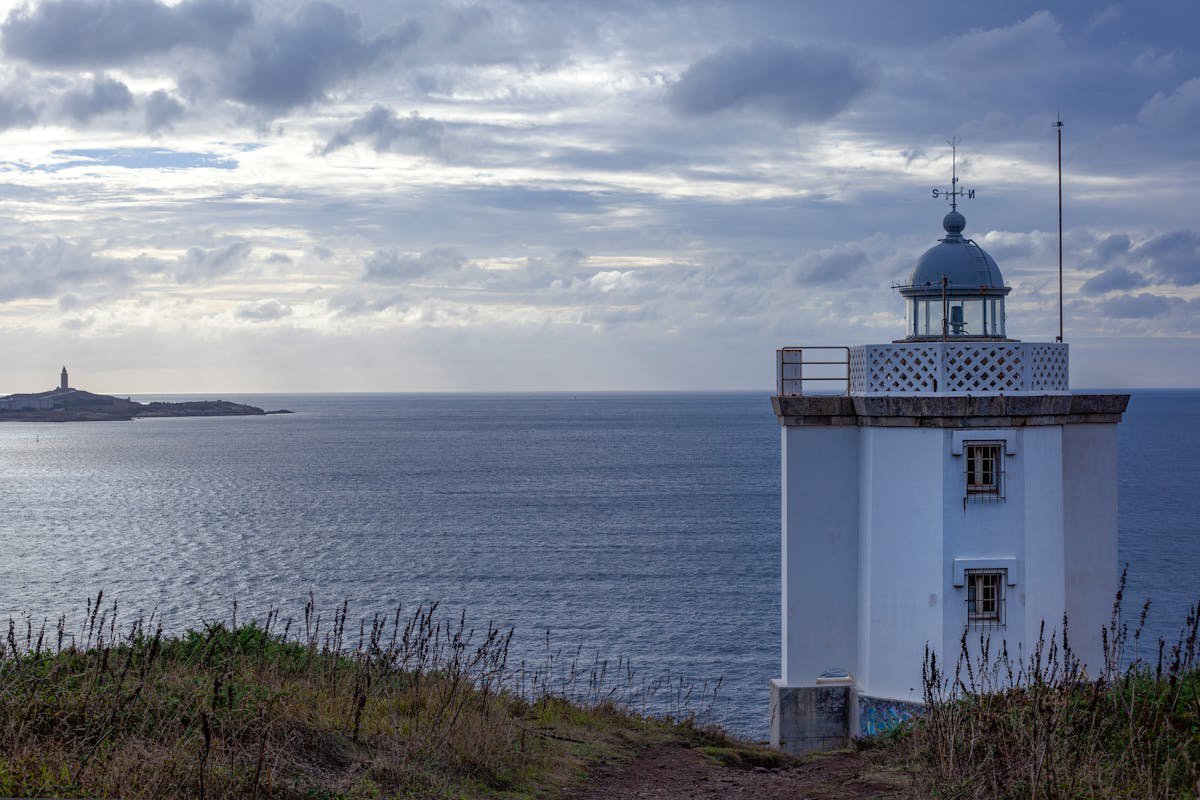 A lighthouse in A Coruña. Photo by Chiaroscuro / Pexels.
Created in partnership with Viajes Camino de Santiago.
The sound of the boots stepping firmly on the earth, crunching leaves underfoot, and the silence that’s only broken by the birdsong and the wind blowing. Many people say that this is the true spirit of the Camino de Santiago, a feeling that’s far away from the hustle and bustle that can be found on popular routes like the Camino Frances. There are routes where it looks like time has stopped completely, where each step lets you explore unique landscapes, villages that keep their medieval charm, and are not as populated as famous routes. If you're looking for an authentic pilgrimage, free from crowds and rush, these lesser-known Camino de Santiago routes are waiting for you with their stories, challenges, and serene beauty.
The Camino Primitivo
The Camino Primitivo, or Original Way, is often considered the first and oldest camino, and history says that it all started when King Alfonso II in the 9th century decided to make a pilgrimage to the tomb of the apostle Saint James. This route starts from the small city of Oviedo and is considered to be challenging but also highly rewarding, making it the first option for people who are looking for alternative Camino de Santiago routes. Its landscapes are mostly adorned with the Asturian mountains — popular thanks to their intense greens and mysterious mists — and you will pass through some of the oldest villages in the country. Another highlight of this route is Lugo, one of the only cities in the world that’s surrounded by an intact Roman wall. Here, the pilgrims are not many, but you can find a few to share stories over a cup of Galician broth. It's not a path for beginners, but if you're looking for solitude and authenticity, this is the route for you.
The Sanabrés Way
This route branches off from the Via de la Plata route in Zamora and is often considered a refuge for those who are fleeing from mass tourism. On the Sanabrés Way, you will find stone villages that look frozen in time, like Puebla de Sanabria, which is home to a stunning castle and a crystal-clear lake. While it’s considered a hike of medium difficulty, this route has its share of challenges: The main one is that there aren't many towns between stages, which means fewer chances to get food and water, so managing everything correctly is top priority here. But as you enter Galicia, towards Santiago de Compostela, the path becomes more intimate with vineyards and chestnut forests. If you have time, make sure to take a soothing bath in Ourense hot springs. It's a path for patient walkers, for those who prefer the murmur of a brook to the noise of a packed hostel.
The English Way
One of the most common questions that many people ask when they arrive in A Coruña is, "Why are there seven scallop shells on the coat of arms?" The seven scallop shells represent the old seven provinces of Galicia, symbolizing the entire region, but it became a symbol for pilgrims. The city serves as one of the starting points of the English Way, along with Ferrol, which nowadays is actually more important in terms of pilgrim numbers. This was the route chosen by people who arrived in Spain by boat from England and Ireland, and it’s considered an easy, short route packed with stunning coastal views. If you begin in A Coruña, the route takes you from the Roman lighthouse of the Tower of Hercules, the oldest working lighthouse in the world, to peaceful trails leading to Santiago. On the other hand, if you start in Ferrol, you’ll check out the military city of Ferrol and the medieval towns of Pontedeume and Betanzos. This route is ideal for those short on time who still want to experience the essence of the Camino.
The Silver Route
The Silver Route, which is commonly known as the Camino Via de la Plata, is an ancient path that follows the footsteps of Roman legionaries, Arab merchants, and medieval pilgrims. This route's starting point is in Seville, and it is often considered the longest (more than 1,000 km) and most fascinating route for its history. Merida is home to a Roman theater; Salamanca has a centuries-old university. On the other hand, the Extremadura section is home to endless meadows and white villages, a harsher landscape many describe as hypnotic. On this route, the silence is so deep you’ll be able to hear your own heart. While it's not a path for everyone, you'll discover the deepest and most unknown parts of Spain.
Each path along the Camino de Santiago is a world apart. Primitivo is challenging but offers mountain views, Sanabres is one of the greenest paths out there, Ingles is amazing for its coastal views, and Silver has an amazing history. Whether you choose the shortest or the longest, they all share the pure essence of the Camino: a blend of effort, beauty, and humanity that makes you feel like you've experienced something unique upon reaching Santiago.