
Why Are There So Many Hotel Collections and What Do They Even Mean?
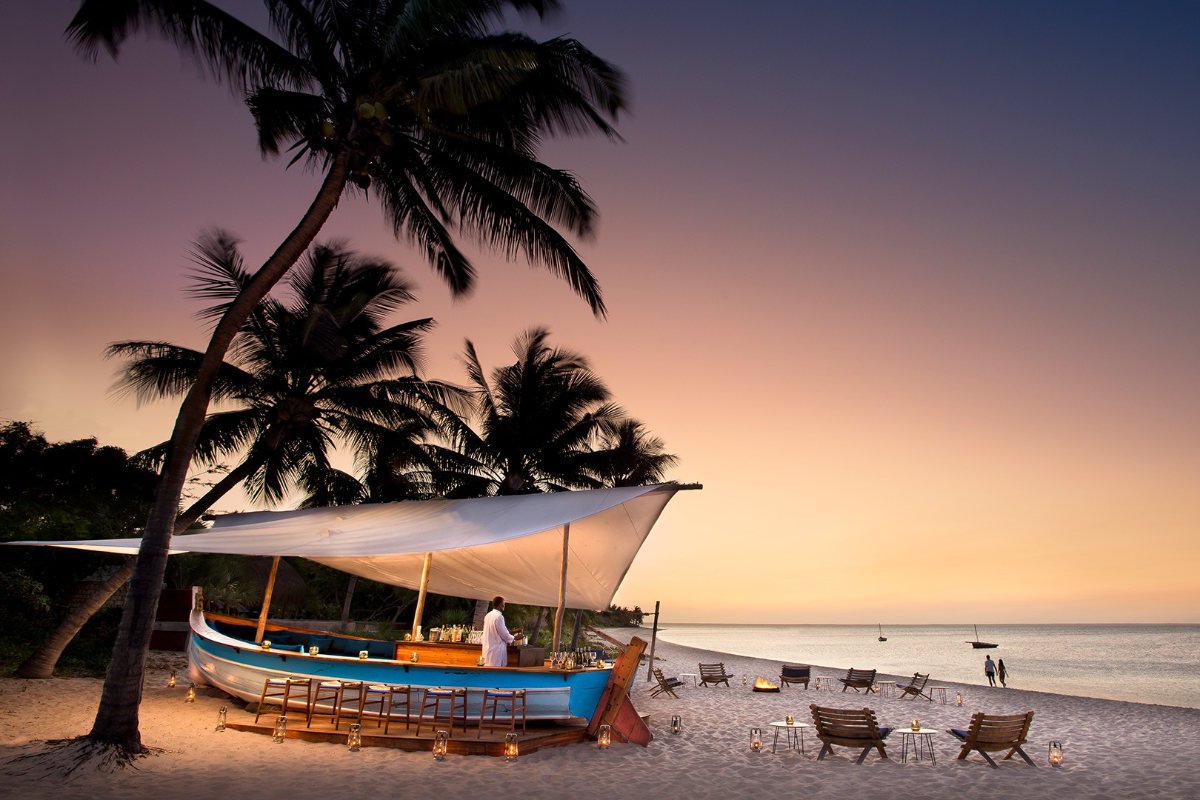 andBeyond Benguerra Island, a member of Beyond Green and Preferred Hotels & Resorts. Photo courtesy of andBeyond.
Dear Travel Shrink: Can you explain the difference between a Leading Hotel of the World and a Preferred Hotel? Or a Design Hotel and a Small Luxury Hotel of the World? I often see these associations on hotel websites and I don’t know what they mean, who’s getting paid (if anyone), and, frankly, why I should even care. What are these “hotel collections” all about? - Confused but Collected
Dear Collected,
Thanks for this great topic. We were just talking about these third-party affiliations and collections as we finished our annual best new hotels preview last week. We’re happy to explain it, but you should know that it’s only after years of being immersed (read: mired) in all this industry jargon that we’ve gotten a handle on this ourselves.
For travelers, these associations/collections (we can use the terms interchangeably) can be a shorthand for quality, service, and prestige — especially when the hotel association enforces rigorous and specific benchmarks and standards from its member hotels. Choice overload often makes picking a hotel confusing, and the stamp of approval from an association can help narrow down your options. For example, if you care about food, seeing a Relais & Châteaux logo on a hotel’s website is a pretty good bet you’ll eat well, since gastronomy is a pillar of R&C hotels. Similarly, you can feel confident that a Design Hotel will have (duh) notable design. Many collections have booking engines and their own loyalty programs and rewards, which can make their websites a good option for making reservations if you like to collect points.
For hotels — particularly independent hotels that are not part of the giant multinational corporations like Marriott, Hyatt, Hilton, Accor, and IHG — the associations provide marketing and sales support as well as exposure to high-quality customers and their reservations. Some associations charge member fees, which can run to tens of thousands of dollars per year. (Travelers never pay anything to associations.)
As you explore the sites, you’ll notice that the collections tend to use many of the same words and descriptions to describe their hotels, criteria, and USPs — words like distinctive, sense of place, quality, exceptional, luxury, exclusive. This means the differences are more about degree than kind.
Let’s get into it with a breakdown of the affiliations worth knowing.
The Independent Hotel Collections Explainer
The Leading Hotels of the World (LWH)
Launched in: 1928
Number of hotels: 420+
Known for: These grand luxury hotels choose to stay independent (the consortium is owned by 60 member hotels) and deliver opulent and “uncommon experiences.” Referrals from member hotels are necessary to join the 100 percent, five-star luxury group. Regular audits are based on hundreds of criteria determined by an executive committee.
Fathom Favorites: Le Sirenuse in Positano, La Mamounia in Marrakech, The Lowell in New York Cit
Relais & Châteaux
Launched in: 1954
Number of hotels: 471 (309 in Europe)
Known for: Independently-owned luxury hotels and restaurants have a strong gourmet focus (and Michelin stars) and are often in historic buildings like castles or manor houses. Properties are vetted via secret inspections with 300 criteria to judge “character, courtesy, calm, charm, and cuisine.”
Fathom Favorites: Meadowood in Napa Valley, Hotel Le Toiny St Barth, Don Alfonso 1890 on the Amalfi Coast
Preferred Hotels & Resorts
Launched in: 1968
Number of hotels: 650+
Known for: Originally a referral organization for independent hoteliers in the United States, it evolved into a major global membership brand with standardized quality criteria. Strong in diversity and worldwide representation. Hotels are further divided into sub-collections like Legend (“ultimate luxury”) and Lifestyle (“approachable luxury”).
Fathom Favorites: Inn at Perry Cabin on the Chesapeake Bay, Dromoland Castle in Ireland, The Leela Palace Udaipur in India
- Beyond Green, a division of Preferred Hotels & Resorts, admits sustainability leaders who are demonstrating rigorous standards across environment, culture, and community through their hotel properties. Fathom Favorites: Post Ranch Inn in Big Sur, Blancaneaux Lodge in Belize, andBeyond Benguerra Island in Mozambique
Small Luxury Hotels of the World (SLH)
Launched in: 1989
Number of hotels: 650+
Known for: character-driven, intimate, often design-forward hotels with distinct personalities and, as the name promises, a small scale, with an average of 50 rooms.
Fathom Favorites: Ca’ di Dio in Venice, La Sultana Marrakech, The Roundtree Amagansett in the Hamptons
- Considerate Collection, a division of SLH, is a collection of eco conscious boutique hotels with standards aligned with UN’s Sustainability Development Goals (SDGs) and Global Sustainable Tourism Council (GSTC) framework. Fathom Favorites: Forestis in the Dolomites, Dar Ahlam in Morocco, Petit St. Vincent in the Caribbean
The Set
Launched in: 2025
Number of hotels: 15 and growing
Known for: The newest affiliation is one to watch for its tight curation (the portfolio won’t include more than one hotel per destination) and great taste (excellent and beautiful hotels). Because the company owned and managed hotels before transitioning to a collection, they bring extra insight into operations.
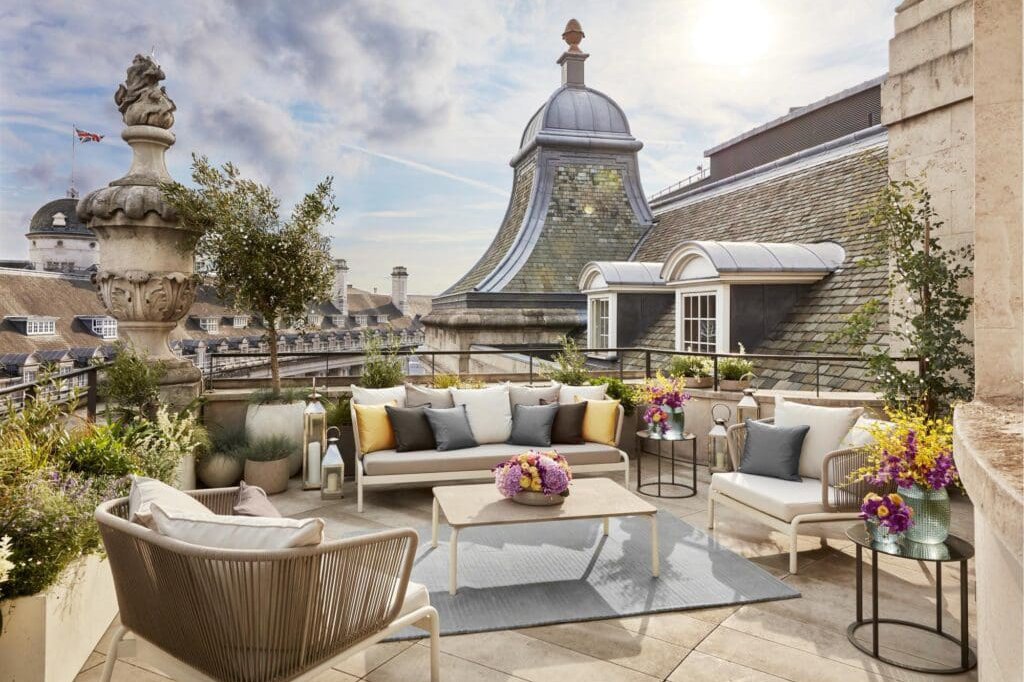
Fathom Favorites: Hotel Café Royal in London, Upper House Hong Kong, Round Hill in Jamaica
Why Do Giant Hotel Chains Have Spinoff Collections?
Think: Individual identity up front, corporate leveraging out back.
Joining a prestige collection within a global hotel company lets hoteliers retain much of their individuality while leveraging the company’s scale, global reservation system, sales and marketing teams, and loyalty programs. Creating these collections lets the giants leverage the appeal and charm of independent hotels, adding style to their corporate identity. Travelers who are loyal to a brand (read: to their Marriott Bonvoy points) may not bother getting to know the spinoffs; the brand affiliation is enough assurance for them.
- Marriott has The Luxury Collection (Hôtel du Couvent in Nice, The Gritti Palace in Venice) and Autograph Collection (The Dorian in Calgary, The Ivens in Lisbon). Marriott acquired Design Hotels in 2021, giving the hotels in the collection exposure to Marriott’s valuable sales, marketing, and reservations muscle. The hotels remain independent (La Bandita Townhouse in Tuscany, Hotel Escondido in Oaxaca).
- Hyatt has The Unbound Collection (Hôtel Martinez in Cannes, Chicago Athletic Association). Taking a page from Marriott’s Design Hotels playbook, in 2023 Hyatt bought Mr. & Mrs. Smith, another curated collection of mainly cool independent hotels.
- Hilton has Curio Collection (The BoTree in London, The Foundry Hotel in Asheville).
- IHG has Vignette (Verno House in Budapest, Souma Hotel in Lima).
- Accor just launched Emblems (Rimrock Banff, Hotel Bellevue in Cortina).
Not to Be Confused With Independent Prestige Hotel Brands
These small, independent hotel companies have (so far) avoided the siren call of acquisition by a global chain. This ABC list is not a comprehensive list but rather the ones we like and cover often.
Auberge Resorts Collection — design-forward spaces and intimate experiences rooted in the destination’s culture.
🩷 Mayflower Inn & Spa, Connecticut; The Lodge at Blue Sky, Utah
Belmond — historic hotels, trains, and river boats with a lot of character and nostalgic artfulness; proximity to UNESCO sites; and an extremely high level of craftsmanship. (Yes, it’s owned by LVMH, but we respect their indie spirit.)
🩷 Hotel das Cataratas, Brazil; Villa Sant’Andrea, Sicily
Capella Hotels and Resorts — a strong hotel brand across Asia that often partners with famous architects and designers. A slow global expansion is afott.
🩷 Capella Bangkok, Capella Sydney
Dorchester Collection — historic hotels located in super prime city-center locations, like Mayfair in London and Sunset Boulevard in Beverly Hills.
🩷 Le Meurice, Paris; Hotel Bel Air, Los Angeles
The Doyle Collection — cosmopolitan and neighborhood-focused urban hotels with warm Irish hospitality (family-owned Irish roots).
🩷 The Bloomsbury, London; The Dupont Circle, Washington, D.C.
Firmdale Hotels — London and New York hotels distinctive for their whimsical design and color-filled, theatrical spaces designed by owner Kit Kemp.
🩷 Crosby Street Hotel, New York City; Ham Yard, London
Grupo Habita — Mexican hoteliers who specialize in adaptive reuse and killer design.
🩷 CondesaDF, Mexico City; La Purificadora, Puebla
Maybourne — a refined collection of bold and self-assured properties with personalized service and strong British heritage.
🩷 Claridge’s, London; The Connaught, London
Oetker Collection — family-run (since 1870!) collection of jaw-dropping landmark buildings insistent on five-star service of the old-school, European hospitality variety.
🩷 Hotel du Cap Eden Roc, Antibes, France; Brenners Park-Hotel & Spa, Baden Baden, Germany
Proper — fun and funky city-based hotels with a strong sense of community, great design, and all the right modern vibes.
🩷 Proper San Francisco; Montauk Yacht Club in the Hamptons
Stylish Search Engines
Finally, let’s make this the year we stop using behemoth booking engines like Booking.com, Expedia, and Priceline. These monopolies put a financial strain on independent hotels and usually demand insane commissions on all bookings. If you want to use an online booking engine, try one of these pleasant and curated alternatives.
- Tablet Hotels
- Boutique-Homes
- Sawdays
- Design Hotels and Mr. & Mrs. Smith still do a great edit, corporate ownership notwithstanding.
Just remember, the best move is to book directly with the hotel on their website.
Do you have a burning question for the travel shrink? Send it to us at travelshrink@fathomaway.com.